
Academy Culture
The life of the academy is ordered around four pillars: Fraternity, Gentility, Sagacity, and Piety.
Fraternity
i.An All-Boys School
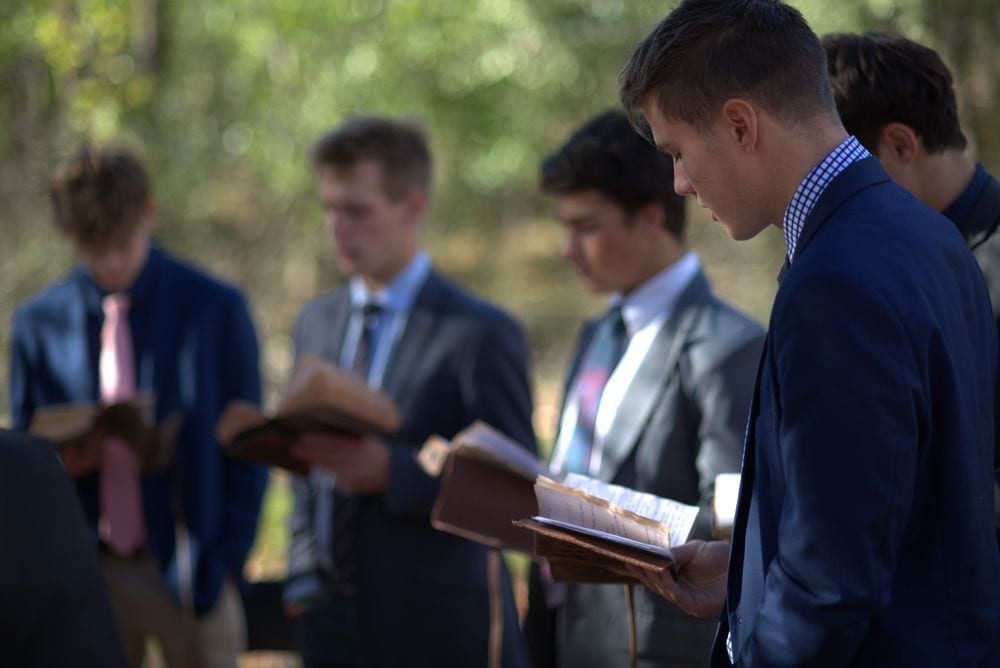
Boys and girls learn very differently. Several of our faculty have taught the same classes in both a co-educational and a single-sex setting, and their observations have shaped our conviction that boys are best formed among boys.
As high-school students undergo physical changes and naturally develop an interest in the opposite sex, single-sex classrooms help students stay less distracted and more focused on the work at hand. There is also less fear of failure: while they are reluctant to admit it, boys and girls alike do not want to “look bad” in front of one another. Remove that social pressure, and you witness a marked boost in students’ confidence and their willingness to take the risks that the pursuit of truth requires. Finally, a single-sex environment fosters healthy competition among young men who are more or less at the same stage of development and who share similar experiences.
While we hope that an all-girls school will one day open to provide girls with similar goods, St. Joseph the Worker Academy has chosen to focus on boys and their particular needs.
ii.The House System
The house system has been a hallmark of English Catholic education for almost a thousand years. The Houses provide a vertical community within the larger school, with members from every grade belonging to each house. These houses provide students with the opportunity to compete with charity, take ownership, answer the call to leadership, and cultivate the conditions in which virtue grows. Each House is led by an upperclassman prefect, guided by faculty advisors, and supported by parent liaisons.
Four House Saints
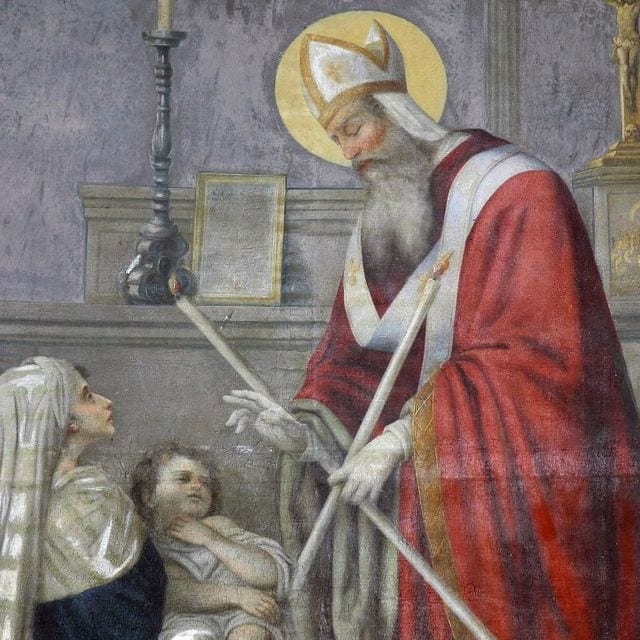
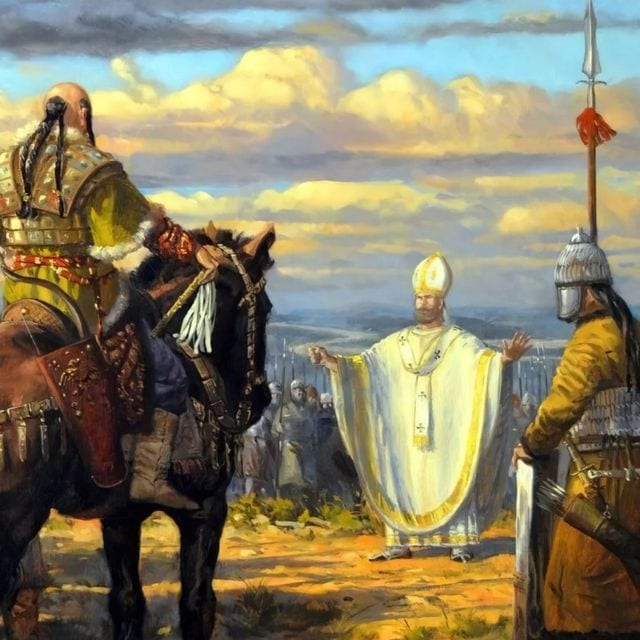
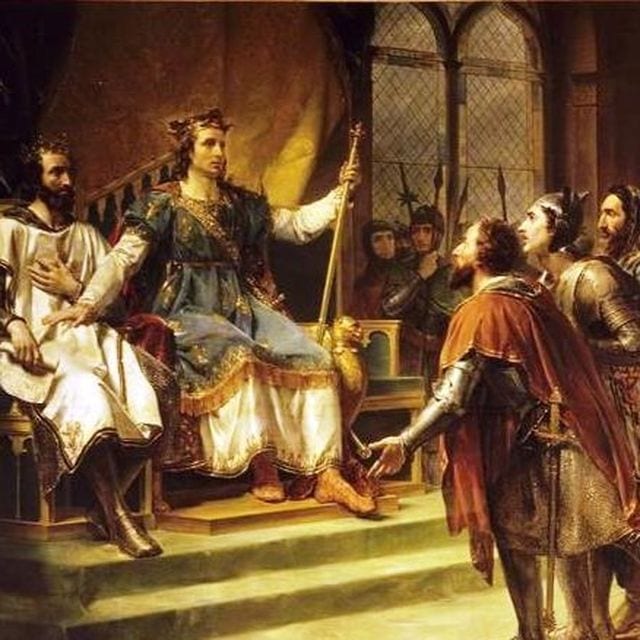
Our four house saints embody various masculine virtues and vocations: St. George, St. Blaise, St. Leo, and St. Louis.

Saint George was a man who abandoned one army for another: he gave up the rank of tribune to enlist as a soldier for Christ. Eager to encounter the enemy, he first stripped away his worldly wealth by giving all he had to the poor. Then, free and unencumbered, bearing the shield of faith, he plunged into the thick of the battle, an ardent soldier for Christ. Clearly what he did serves to teach us a valuable lesson: if we are afraid to strip ourselves of our worldly possessions, then we are unfit to make a strong defense of the faith.
As for Saint George, he was consumed with the fire of the Holy Spirit. Armed with the invincible standard of the cross, he did battle with an evil king and acquitted himself so well that, in vanquishing the king, he overcame the prince of all wicked spirits, and encouraged other soldiers of Christ to perform brave deeds in his cause.
Of course, the supreme invisible arbiter was there, who sometimes permits evil men to prevail so that his will may be accomplished. And although he surrendered the body of his martyr into the hands of murderers, yet he continued to take care of his soul, which was supported by the unshakable defense of its faith.
Dear brothers, let us not only admire the courage of this fighter in heaven’s army but follow his example. Let us be inspired to strive for the reward of heavenly glory, keeping in mind his example, so that we will not be swayed from our path, though the world seduce us with its smiles or try to terrify us with naked threats of its trials and tribulations.
We must now cleanse ourselves, as Saint Paul tells us, from all defilement of body and spirit, so that one day we too may deserve to enter that temple of blessedness to which we now aspire.
From St. Peter Damian’s Sermon on St. George the MartyrIt is told how he was elected, not only by the canons, but also by all the laity of Sebaste. Suddenly in their hearts God inspired them all to cry out in a loud voice for Blaise to be the bishop. He refused; nevertheless he was elected, and in tears he assumed his position. Why was he weeping? Because in the judgment bishops must render an account not only for their own souls, but for all committed to them. As Scripture says, “a most severe judgment shall be for them who rule. For to him that is little, mercy is granted: but the mighty shall be mightily tormented” (Wis 6:6–7).
• • •
The saints of old accepted the episcopal burden with the greatest trepidation, and would refuse until they knew the will of God, and then, trusting in divine help, accepted. It is told how St. Blaise, having been made a bishop, did not change his manner of life, as do many wicked men. And because St. Blaise did not abandon his way of life, neither did God remove from him the grace of miracles; rather he augmented it, for he was curing not only men but even wild beasts, which obeyed him.
The story is told of the poor woman who had one pig, which was seized by a wolf. She rushed to St. Blaise to have him command the wolf to return the pig she had purchased. This he did, and immediately the wolf brought it back alive.
• • •
When a persecution arose, St. Blaise was deposed and exiled to the desert, where he lived in a cave in great penance. He could say with David, “Being pushed I was overturned that I might fall: but the Lord supported me” (Ps 117:13). Trusting in God he said, “The eyes of all hope in thee, O Lord” (Ps 144:15), reciting his hours as if he were in the city. At the dinner hour birds would come bringing him food — doves with grains of wheat, a woodpecker with an olive in its beak, crows with fresh figs, falcons with partridges — and St. Blaise recited his verses while all the birds gathered round him in a circle. No bishop or king had so many servants.
And not only birds, but lions, bears, and wolves came to him — if they were ill, or had a thorn or something stuck in the throat — showing him their wounds, which he cured in the name of Jesus with the sign of the cross. “Men and beasts you will preserve, O Lord: O how have you multiplied your mercy, O God!” (Ps 35:7–8).
From St. Vincent Ferrer’s Sermon on St. BlaiseSt. Leo the Great was truly one of the greatest Pontiffs to have honored the Roman See, making an important contribution to strengthening its authority and prestige. He was the first Bishop of Rome to bear the name Leo, and the first Pope whose preaching to the people has come down to us.
A Tuscan native, Leo became a deacon of the Church of Rome around 430 and was elected Pope in 440, while away on a peace mission in Gaul. His pontificate lasted more than twenty-one years and was undoubtedly one of the most important in the Church’s history.
The times were difficult: barbarian invasions, the weakening of imperial authority in the West, and a long social crisis forced the Bishop of Rome to play an important role in civil and political events. One episode endures above all: in 452 Leo met Attila, chief of the Huns, and dissuaded him from continuing his war of invasion, saving the Italian peninsula. Three years later, defenseless and surrounded by his clergy, he went out to meet Genseric’s Vandals and, though he could not prevent the plundering of the city, he prevented Rome from being burned.
We know Leo through nearly one hundred beautiful sermons and some 150 letters, in which he appears as both Theologian and Pastor — a tireless champion of the Roman Primacy and the authentic heir of the Apostle Peter. At the Council of Chalcedon in 451, his doctrinal text on Christ — the Tome to Flavian — was received with acclamation: “Peter has spoken through the mouth of Leo.”
From Pope Benedict XVI’s 2008 General Audience on Pope St. Leo the GreatSt. Louis IX of France has long been honored as an exemplary ruler, an outstanding husband and father of eleven children — whom he educated in an excellent and pious way — a fearless warrior, and a great champion of the faith. G. K. Chesterton observed that Saint Louis “was a man in whom holiness and healthiness had no quarrel.”
His life was anchored in daily Mass and the Liturgy of the Hours, marked by prayer, fasting, and simplicity. His strong faith and his good works were like “the two arms with which he held on firmly to God.”
His love for God compelled him to protect the weakest and most vulnerable — orphans, widows, and the needy. He visited the sick and served them himself. As King of France he reformed the judicial system, reviving the principle that an accused person is innocent until proven guilty. He upheld the rights and dignity of the Church, built monasteries and hospitals, and commissioned Sainte-Chapelle in Paris to house relics of the Lord’s Passion. Dying encamped at Tunis on his way to liberate the Holy Land, he turned his thoughts heavenward: “I will enter Thy house; I will worship in Thy holy temple and sing praises to Thy name.”
Adapted from a 2025 reflection by Chancellor Michael Andrews, Diocese of Lansingiii.Prefects
The role of the prefect is to lead his House to virtue and victory by persuading and encouraging its members to contribute their time and talent to the work of the House. Prefects are servant leaders — to their Houses and to the school as a whole — who serve by building community, school spirit, and good character.
Though they are not enforcers of the rules, prefects strive to follow them and to show the worth and reasoning behind them, and the benefits that come from respecting them. As leaders of their Houses, they serve as advocates and voices for their members, helping the administration maintain a deeper and more personal relationship with the student body. In short, a prefect is a servant leader, a representative of his House, and a model of good character and leadership.
iv.Athletics

Part of the formation of a boy is the formation of his body. He needs to strengthen his body, control his power, and challenge himself against other boys. Every student is expected to participate in athletics unless a physical condition prevents him. During recess each day we have sports, calisthenics, or physical challenges.
We have a basketball team with St. Thomas High School, and we intend to compete with local schools in sports such as wrestling and rugby as our program grows. Several of our boys also join local sports teams such as soccer and track.
Gentility
i.Discipline
All of our teachers are required to read Don Bosco’s writings on the Preventive System, for our discipline is formed in emulation of the saint who held that love and prevention are better motives to good discipline than fear and punishment. Thus, we prevent wrongdoing by good supervision and clearly defined rules and standards of behavior.
When infractions do occur, discipline is handled on a case-by-case basis, taking into account the particular circumstances and looking to the good of the student and the Academy.
ii.Dress Code
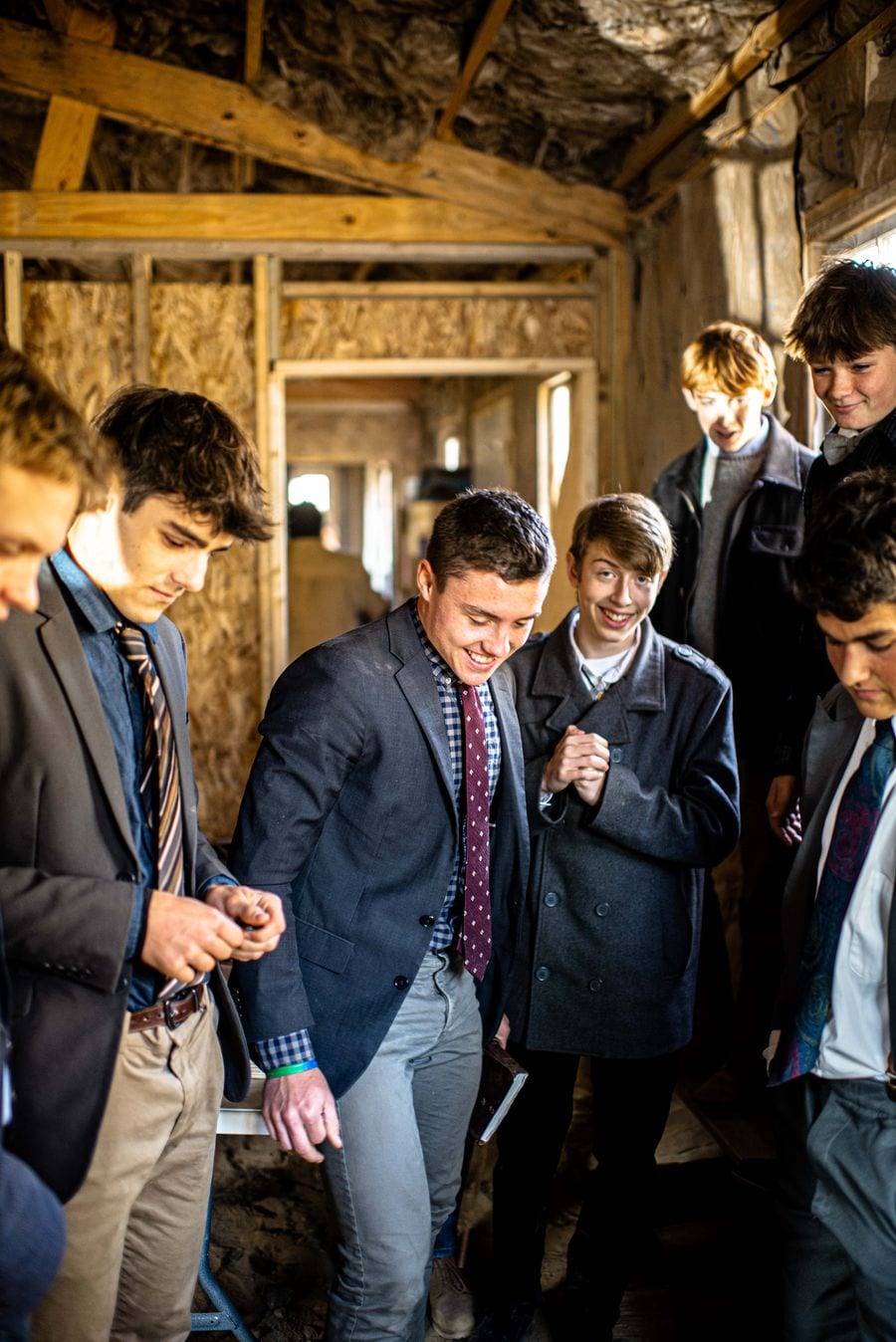
The Academy wants every boy to know how to dress for any occasion, and our dress code has several classes tailored to the different kinds of “work” a student will be doing. Our academic attire — worn through most of the average class day — is essentially “smart business casual.” Faculty and students wear the same kinds of articles, but unlike schools that require monotony of color and style, each is free to discover the combinations that suit him.
Inevitably, students — especially freshmen — will sometimes make mistakes with color and pattern. High school is precisely the time to learn from such mistakes, before one enters the professional world. Our trades-work attire is far more focused on practicality and safety, though a student must still look put together rather than slovenly.
iii.Technology Policy

In the modern world technology is the greatest enemy to quiet. With our phones in our pockets and our computers on our desks we are always in the marketplace, always in the newsroom, always pulled away from the moment. At SJWA we fast from our phones, computers, and other devices so we can focus the mind away from these distractions. The students handwrite their papers, research in our library, and spell without spellcheck. It is in this environment that our students see and wonder at the world, engage with their fellow students, and study with a spirit of leisure.
iv.Don Rags
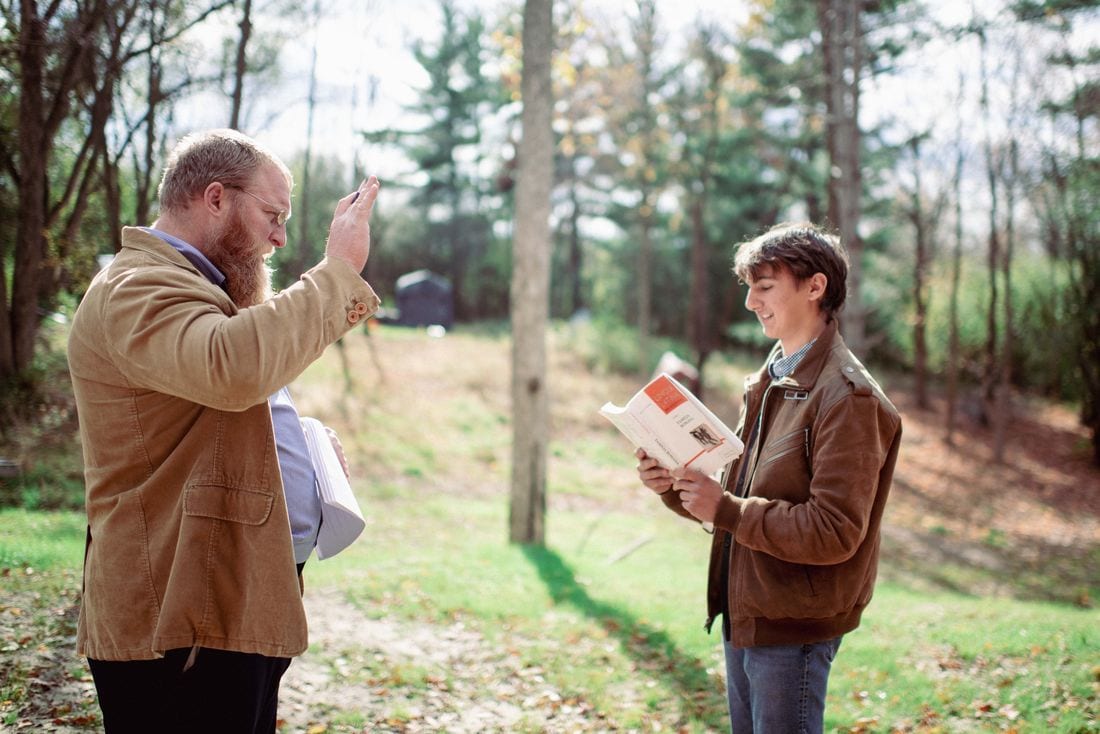
Grades are the standard academic gauge of how well a student is doing, but they are a blunt instrument at best and limited in their scope. At SJWA we have grades, but more importantly we have “Don Rags,” an old academic practice of conversational evaluation. One by one the students meet with all of the faculty members together. Instead of just hearing a letter grade, the faculty discuss holistically the student’s progress, giving both encouragement and criticism. Although each session is about 15 minutes, it gives each boy a clear path to improve and a sense of accountability for his actions.
Piety
i.St. Joseph the Worker
Our patron, St. Joseph, was the spouse of Mary and the foster father of Jesus Christ; from these sources sprang his dignity, his holiness, and his glory. United to the Blessed Virgin by the ties of marriage, he approached nearer than any other to the eminent dignity by which the Mother of God surpasses all created natures. The Word of God was humbly subject to him, obeyed him, and rendered to him all those offices that children owe to their parents.
And St. Joseph — of royal blood, united in marriage to the holiest of women, the foster father of the Son of God — passed his life in labor, and won by the toil of the artisan the support of his family. The condition of the lowly has nothing shameful in it; the work of the laborer is not only not dishonoring but, if virtue be joined to it, can be singularly ennobled. This is the conviction at the heart of our school.
Read: Pope Leo XIII, Quamquam Pluries›
The special motives for which St. Joseph has been proclaimed Patron of the Church are that Joseph was the spouse of Mary and that he was reputed the father of Jesus Christ. From these sources have sprung his dignity, his holiness, his glory. In giving Joseph the Blessed Virgin as spouse, God appointed him to be not only her life’s companion, the witness of her maidenhood, and the protector of her honor, but also, by virtue of the conjugal tie, a participator in her sublime dignity.
Hence it came about that the Word of God was humbly subject to Joseph, obeyed him, and rendered to him all those offices that children are bound to render to their parents. Joseph became the guardian, the administrator, and the legal defender of the divine house whose chief he was. He set himself to protect with a mighty love and a daily solicitude his spouse and the Divine Infant; by his work he earned what was necessary for their nourishment and clothing; he guarded the Child threatened by a monarch’s jealousy, and found for Him a refuge.
As to workmen, artisans, and persons of lesser degree, their recourse to Joseph is a special right, and his example is for their particular imitation. For Joseph, of royal blood, united by marriage to the greatest and holiest of women, reputed the father of the Son of God, passed his life in labor, and won by the toil of the artisan the needful support of his family. It is, then, true that the condition of the lowly has nothing shameful in it, and the work of the laborer, if virtue be joined to it, can be singularly ennobled.
Pope Leo XIII · Encyclical Quamquam Pluries (1889)ii.Daily Mass
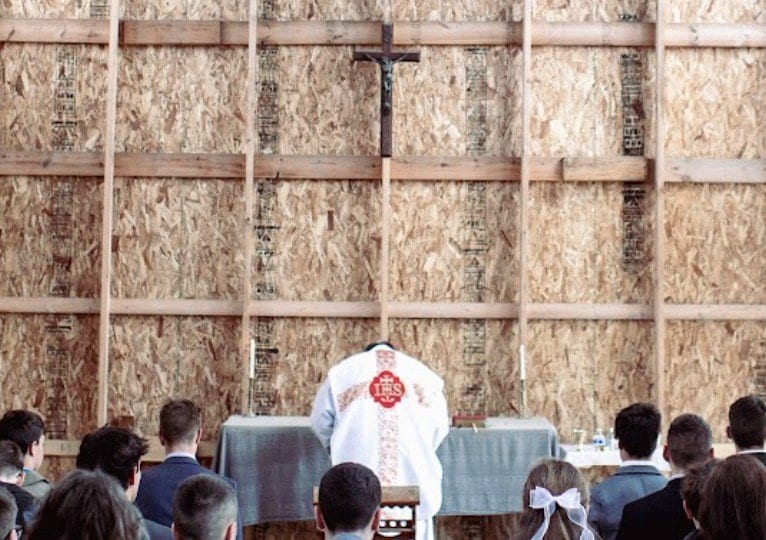
Our faculty take this admonition seriously. As St. Thomas Aquinas teaches, “the celebration of Holy Mass has the same value as the Death of Jesus on the Cross.” If the Academy claims to educate the whole person well, it cannot ignore the greatest spiritual content, the most expedient means of delivering it, and the most knowledgeable teacher available to its members every day. As St. John Bosco says, daily Mass is “the pillar which must support the edifice of education.”
The Academy is therefore committed, every day it is in session, to having Holy Mass said on the premises — or, when no priest is available, to driving to one of the nearby parish churches. Because the Academy is almost always in session on Fridays, and because the Sacrament of Penance is also made available, fulfilling the requirements of the First Fridays Devotion is far easier for our boys than it otherwise would be.
iii.The Little Office of the Blessed Virgin Mary
In days of old, the Little Office of the Blessed Virgin Mary was the favorite devotion among all who could read — indeed, it was from the Book of Hours that children were ordinarily taught to read. St. Louis, King of France, said it daily and had his children do likewise; St. Vincent Ferrer, St. Edmund, and many others recited it daily on their knees; St. Ambrose of Siena knew it by heart at the age of seven. Our Lord once told St. Gertrude that no devotion pleased Him better than its devout recitation.
Looking to the example of such saints, the Academy largely structures its day around the four minor day hours of the Little Office — Prime, Terce, Sext, and None. At these four times, faculty and students suspend all class and trades work to chant the relevant hour in Latin. Though each takes only about ten minutes, we find the atmosphere of contemplation persists long after the final notes are sounded in honor of Our Lady.
iv.Holy Days
Many Catholics are unaware that the Church has historically recognized a few dozen feast days as deserving special and obligatory recognition. Though current law has removed the obligation to attend Mass on most of these days — a prudential decision made for our post-Christian society — the Church still desires us to keep them holy. The Academy honors that desire by suspending its normal class schedule for communal celebration. The weekday feasts below, rather than civic holidays, govern our academic calendar.
- 1Nativity of Our Lord / Christmas
- 2Circumcision / Octave of the Nativity
- 3Epiphany of Our Lord
- 4Monday within the Octave of the Resurrection
- 5Tuesday within the Octave of the Resurrection
- 6Ascension of Our Lord
- 7Monday within the Octave of Pentecost
- 8Tuesday within the Octave of Pentecost
- 9Most Holy Trinity
- 10Most Holy Body of Christ
- 11Finding of the Holy Cross
- 12Immaculate Conception of the B.V.M.
- 13Purification of the B.V.M.
- 14Annunciation of the B.V.M.
- 15Assumption of the B.V.M.
- 16Nativity of the B.V.M.
- 17Dedication of St. Michael
- 18Nativity of St. John the Baptist
- 19Ss. Peter and Paul, Apostles
- 20St. Andrew the Apostle
- 21St. James the Apostle
- 22St. John the Apostle
- 23St. Thomas the Apostle
- 24Ss. Philip and James, Apostles
- 25St. Bartholomew the Apostle
- 26St. Matthew the Apostle
- 27Ss. Simon and Jude, Apostles
- 28St. Matthias the Apostle
- 29St. Stephen the Protomartyr
- 30The Holy Innocents
- 31St. Lawrence the Deacon
- 32Pope St. Sylvester
- 33St. Joseph, Spouse of the B.V.M.
- 34St. Anne, Mother of the B.V.M.
- 35All Saints’ Day